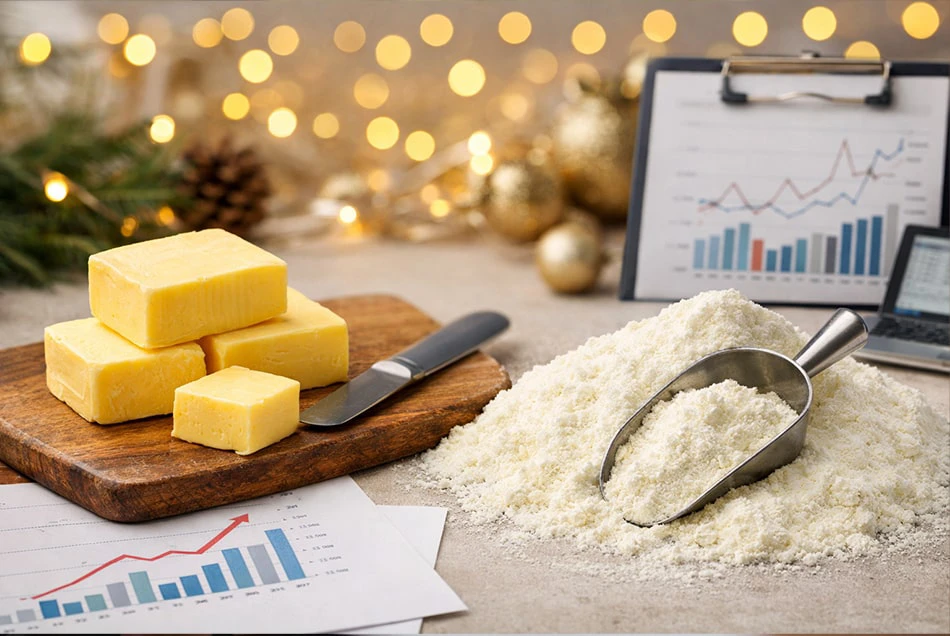

Ramadan dairy demand trends are shaping up to be a major strategic factor for food manufacturers and dairy ingredients traders in 2026. With increased consumption of dairy-based meals during iftar and suhoor, industrial buyers must anticipate shifts in ingredient needs, supply chain dynamics, and pricing pressures to ensure consistent production and profitability throughout the holy month.
 Ramadan dairy demand trends are shaping up to be a major strategic factor for food manufacturers and dairy ingredients traders in 2026. With increased consumption of dairy-based meals during iftar and suhoor, industrial buyers must anticipate shifts in ingredient needs, supply chain dynamics, and pricing pressures to ensure consistent production and profitability throughout the holy month.
Introduction
Ramadan dairy demand trends are shaping up to be a major strategic factor for food manufacturers and dairy ingredients traders in 2026. With increased consumption of dairy-based meals during iftar and suhoor, industrial buyers must anticipate shifts in ingredient needs, supply chain dynamics, and pricing pressures to ensure consistent production and profitability throughout the holy month. Dairy powders—especially milk powder—have emerged as foundational ingredients for many products, offering stability and logistical advantages compared to fresh dairy solutions.
To help industry professionals prepare effectively, this blog explores key trends such as seasonal dairy procurement optimization, supply stability solutions, price volatility planning, functional dairy ingredient demand, and trade forecasts for dairy powders.

Seasonal Dairy Procurement Optimization
Ramadan typically drives a surge in demand for dairy ingredients across food manufacturers, particularly for products like milk powder, cheese, butter, and yogurt bases. This creates an imperative for seasonal dairy procurement optimization—planning ahead to secure bulk contracts, adequate inventory, and reliable suppliers before seasonal price spikes occur. In markets like Saudi Arabia and other Muslim-majority regions, government and private sector support have ensured dairy supply readiness, with millions of tons of production aimed at satisfying Ramadan food demand.
For procurement teams, this means evaluating storage capacity, forecasting projected usage in product lines, and aligning supplier contracts well before Ramadan begins to mitigate last-minute supply shocks.
Supply Stability Solutions
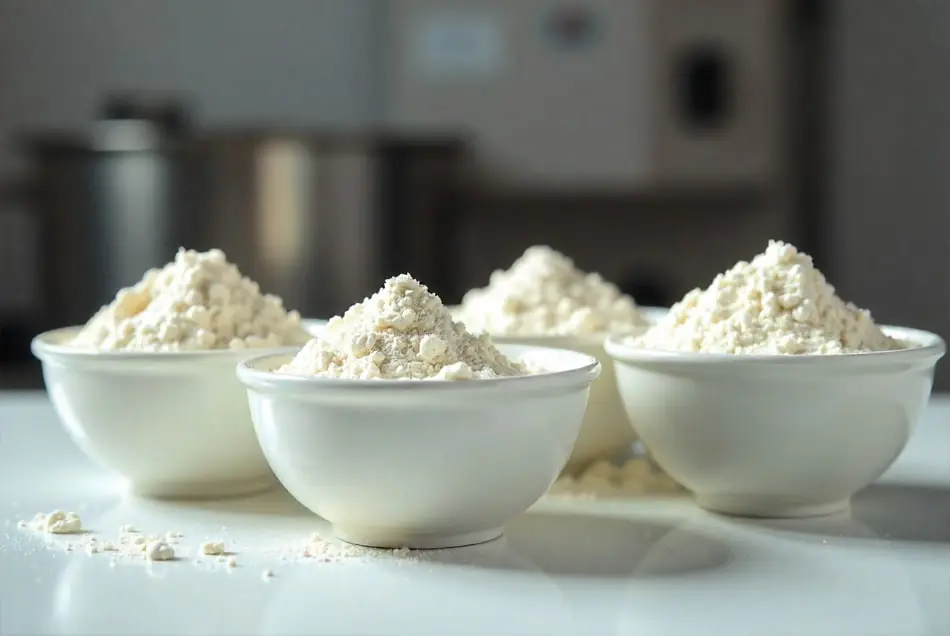
Ensuring supply continuity during Ramadan requires supply stability solutions that extend beyond traditional sourcing. Powdered dairy ingredients such as skim milk powder (SMP) and whole milk powder (WMP) offer significantly longer shelf life compared to fresh milk, reducing dependency on cold chains and minimizing spoilage risk. Milk powders also allow food manufacturers to maintain consistent quality in products such as confectionery, baked goods, beverages, and ready-to-eat meals. The global dairy ingredients market continues to show strong growth, with segments like milk powder dominating revenue and adoption due to their functional versatility.
Integrating reliable suppliers with robust logistics can help companies secure stable deliveries even when demand spikes during the Ramadan period.
Price Volatility Planning
Seasonal uplift in dairy consumption can lead to fluctuations in ingredient pricing, making price volatility planning essential. Milk powder, in particular, tends to exhibit more predictable pricing behavior compared to fresh milk due to its global trading mechanisms and ability to be stored over long durations. By forecasting price trends and securing forward contracts, B2B buyers can lock in favorable rates and avoid exposure to sudden pricing swings in the lead-up to Ramadan.
Your procurement strategy should include analysis of historical price movement, projected demand, and contractual safeguards to protect margins during peak buying seasons.
Functional Dairy Ingredient Demand
Another important trend is functional dairy ingredient demand—the growing need for dairy components that contribute specific nutritional, textural, or processing benefits. Milk protein concentrates, whey protein, and fortified milk powders are increasingly being adopted in industrial applications due to their reliability and predictable performance in formulations. This trend reflects broader growth in health-oriented dairy ingredients used in bakery, beverage, and nutritional product lines, beyond traditional uses.
Manufacturers should assess demand for these functional ingredients early to integrate them into product innovation and seasonal releases for Ramadan markets.
Dairy Powder Trade Forecasts
Long-term dairy powder trade forecasts indicate sustained growth, driven by industrial demand and expanding food processing sectors. Reports suggest that global milk powder markets are forecast to expand through the end of the decade, offering opportunities for scaling exports and imports across major dairy trade corridors. Powdered milk’s versatility makes it a cornerstone of international dairy trade strategies, especially for countries with significant food manufacturing industries.
Aligning procurement plans with forecasted import/export routes and pricing cycles can yield competitive advantages for manufacturers and ingredient traders.
Why Partner With Hiroland for Ramadan 2026 Procurement
As Ramadan 2026 approaches, securing reliable, high-quality dairy ingredients becomes a critical priority for food manufacturers and dairy ingredient traders facing predictable demand surges and tighter supply conditions. Hiroland distinguishes itself as a strategic B2B partner by offering industrial-grade dairy solutions designed specifically to support large-scale production, cost control, and operational consistency during peak seasons.
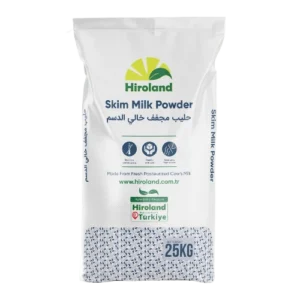
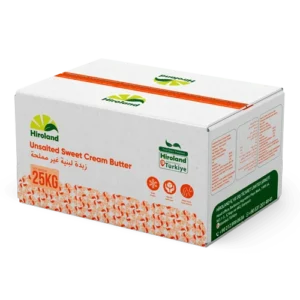
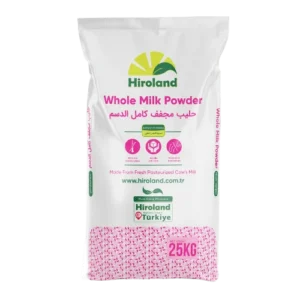
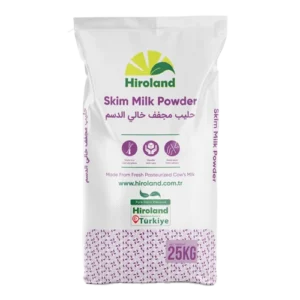
Hiroland’s comprehensive product portfolio—including skim milk powder, whole milk powder, fortified dairy bases, and butter —is engineered to deliver consistent functional performance, batch-to-batch reliability, and predictable formulation outcomes across diverse food applications. These characteristics are essential for manufacturers seeking supply stability solutions and effective price volatility planning, particularly when fresh dairy availability and pricing become more uncertain during Ramadan.
In addition, Hiroland’s export-ready packaging, extended shelf life, and strict quality control standards enable buyers to plan procurement well in advance, reduce inventory risk, and maintain uninterrupted production schedules. Supported by a global distribution network and scalable production capacity, Hiroland ensures timely deliveries and dependable supply across international markets, helping partners mitigate seasonal disruptions and optimize seasonal dairy procurement optimization strategies.
By partnering with Hiroland, food manufacturers and dairy traders gain more than a supplier—they gain a long-term sourcing partner capable of supporting production continuity, margin protection, and operational confidence throughout the Ramadan period and beyond.
contact us today to secure reliable dairy ingredients for your upcoming manufacturing needs.
Read More: Types of Milk Powder: Which One Can Revolutionize Your Dairy Imports?
Read More: Dairy Products Market Size & Share Analysis – Growth Trends and Forecast (2026 – 2031)