

Types of milk powder play a critical role in modern food manufacturing across the dairy, bakery, confectionery, beverage, and nutrition sectors. For B2B producers, choosing between Whole Milk Powder, Skimmed Milk Powder, Buttermilk Powder, or Fat-Filled Milk Powder can significantly influence product quality, formulation behavior, process efficiency, and overall profitability. This guide provides an in-depth technical overview of milk powder varieties, including market relevance.
 Types of milk powder play a critical role in modern food manufacturing across the dairy, bakery, confectionery, beverage, and nutrition sectors. For B2B producers, choosing between Whole Milk Powder, Skimmed Milk Powder, Buttermilk Powder, or Fat-Filled Milk Powder can significantly influence product quality, formulation behavior, process efficiency, and overall profitability. This guide provides an in-depth technical overview of milk powder varieties, including market relevance.
Cost-Effective Options for Types of Milk Powder Business
Types of milk powder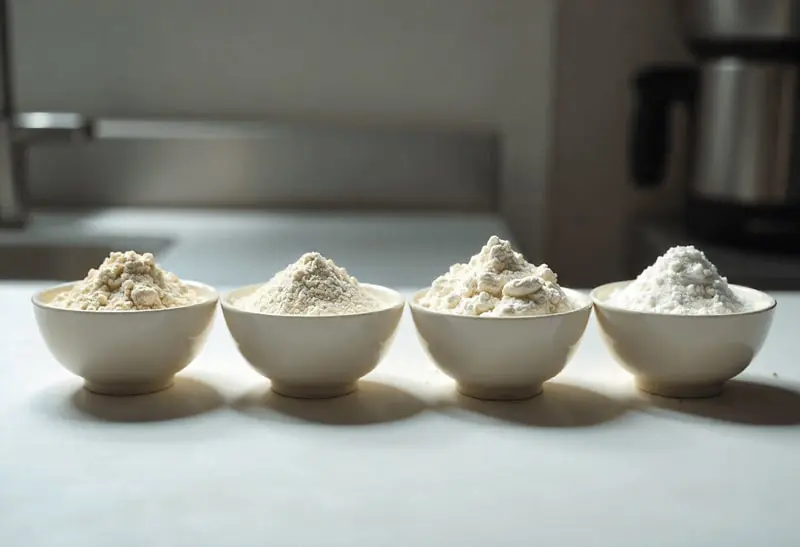 are essential ingredients across industrial food production — from cheese and yogurt to ice cream, bakery, beverages, and nutrition products. Choosing the right type is far more than a cost consideration; it directly influences texture, stability, nutritional value, and processing performance.
For B2B manufacturers, selecting between Whole Milk Powder (WMP), Skimmed Milk Powder (SMP), Buttermilk Powder (BMP), and Fat-Filled Milk Powder (FFMP) can shape product quality, formulation behavior, production efficiency, and overall profitability.
Each milk powder type varies in fat content, protein level, lactose composition, heat treatment classification, emulsification capability, and sensory characteristics.
Understanding these differences is crucial for manufacturers in cheese, yogurt, ice cream, chocolate, UHT beverages, bakery goods, and dry mixes to optimize yield, texture, stability, and cost structure.
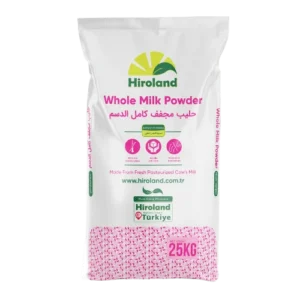
Whole Milk Powder (WMP)
Whole Milk Powder is a spray-dried product with a high milk-fat content, typically 26–28%, depending on the specification. It contains the full spectrum of natural milk components, giving it strong sensory performance.
Key Composition Characteristics
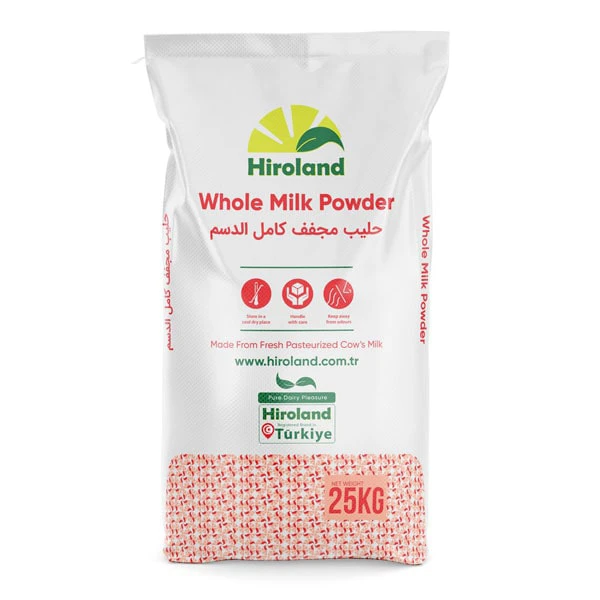 • Fat: 26–28% (main source of creaminess and richness)
• Proteins: ~24–25%
• Lactose: ~38–40%
• Moisture: < 3.5%
Functional Advantages
• Superior Creaminess: Milk fat provides a full-bodied, rich texture ideal for premium products.
• Flavor Release: Milk fat facilitates aroma distribution and flavor perception.
• Improved Heat Stability: Depending on heat treatment, WMP tolerates pasteurization and recombination processes effectively.
• Versatile Reconstitution: Suitable for both cold and hot rehydration systems.
Industrial Applications
• Chocolate and confectionery: Enhances mouthfeel, color, and fat balance.
• Ice cream: Contributes to texture, overrun control, and melting behavior.
• Recombined dairy (UHT milk, evaporated milk): Essential in markets with limited liquid milk availability.
• Bakery: Adds richness, browning properties, and moisture retention.
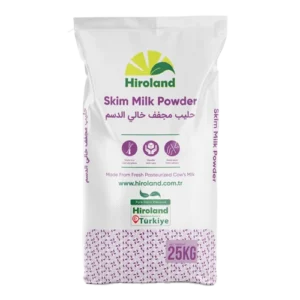
Skimmed Milk Powder (SMP)
SMP contains a maximum of 1.5% fat and is valued for its high protein and solubility. The functional properties of SMP depend significantly on the heat treatment applied during manufacturing.
Key Composition Characteristics
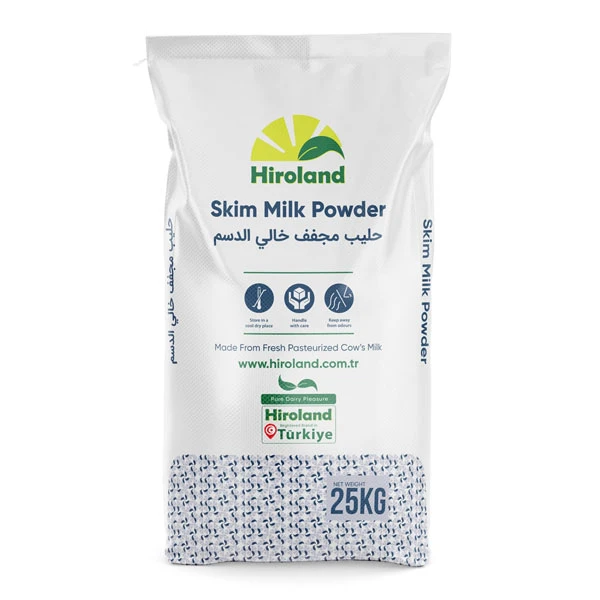 • Fat: ~0.6–1.5%
• Protein: ~34–36%
• Lactose: ~45–55%
• Moisture: < 4%
Heat Treatment Categories
- Low-heat SMP:
- Ideal solubility
- Best for infant formula, beverages, and recombined milk
- Medium-heat SMP:
- Balanced solubility and functionality
- High-heat SMP:
- Strong water-binding and viscosity
- Suitable for bakery and yogurt applications
Functional Advantages
• Protein Fortification: High protein makes SMP useful for boosting solids in dairy fermentation systems (e.g., yogurt).
• Water Binding: Helps control texture in bakery products and processed meats.
• Foaming Properties: Useful in confectionery and whipping agents.
• Heat Stability: Ideal for UHT and HTST processing depending on heat class.
Industrial Applications
- Yogurt and fermented milk: Increases viscosity and protein content.
- Cheese production: Contributes to curd formation and yield improvement.
- Bakery: Enhances dough strength and browning.
- Beverage mixes, tea whiteners, and nutritional powders
Buttermilk Powder (BMP)
BMP originates from buttermilk — the liquid phase remaining after butter churning — and includes a high concentration of milk fat globule membrane (MFGM) components.
Key Composition Characteristics
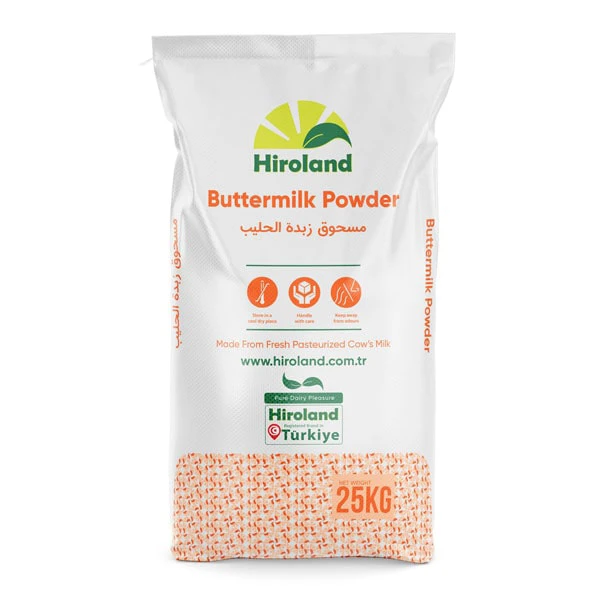 • Fat: 4–8%
• Protein: Min 33%
• Phospholipids: Significantly higher than SMP/WMP
• Lactose: 45–55%
Functional Advantages
• Natural Emulsifier: Phospholipids enhance emulsification in fat-containing systems.
• Creamy Mouthfeel: BMP improves texture by binding fat and water phases.
• Color and Viscosity Enhancement: Useful for dairy recombined systems.
• Thermal Stability: Performs well in high-heat processing.
Industrial Applications
• Chocolate manufacturing: Improves viscosity control and fat dispersion.
• Bakery: Enhances softness and crumb texture.
• Recombined milk and UHT systems: Contributes to homogeneity and stability.
• Ice cream: Supports emulsification and overrun control.
Fat-Filled Milk Powder (FFMP)
FFMP is formulated by blending skim milk solids with vegetable fat, often palm or coconut oil. It is an economical alternative to WMP.
Key Composition Characteristics
- Fat: 15–30% (vegetable-based)
- Protein: 10–15%
- Lactose: 35–45%
Functional Advantages
• Cost Efficiency: Offers creaminess similar to WMP at a significantly lower cost.
• Stable Fat Profile: Vegetable fats are less susceptible to oxidation.
• Customizable Formulation: Can be produced to match desired fat content or solubility.
Industrial Applications
• Recombined beverages (tea whiteners, coffee mixes, UHT drinks).
• Bakery applications: Adds body and whiteness.
• Desserts, puddings, and custards.
• Regions where dairy fat is expensive or restricted by tariff structures.
Technical Comparison Table
| Property | WMP | SMP | BMP | FFMP |
| Fat Type | Milk fat | Low fat | Milk fat + MFGM | Vegetable fat |
| Emulsification | Medium | Low | Very high | Medium |
| Solubility | Medium | High | Medium | Medium |
| Creaminess | Very high | Low | High | High |
| Cost | High | Moderate | Moderate | Low |
| Best Use | Chocolate, ice cream | Yogurt, cheese | Chocolate, recombined milk | Drinks, bakery |
Practical milk powder varieties for B2B Manufacturers and Distributors
• Blend Strategically: Use SMP to increase protein content without fat — or combine SMP and BMP to benefit from both protein functionality and emulsifying lipids.
• Optimize Cost without Sacrificing Quality: Consider substituting part of WMP with FFMP to cut costs while preserving sensory quality.
• Storage Matters: For fat-rich powders (WMP, FFMP), ensure low-oxygen or nitrogen-flushed packaging to reduce oxidation risk.
• R&D Trialing: Run pilot batches when switching types — even small changes in fat or protein see big shifts in texture and stability.
Hiroland’s Industrial Milk Powder Solutions for Global Manufacturers
As a leading dairy ingredient manufacturer, Hiroland supplies a full portfolio of industrial milk powder solutions — Skimmed Milk Powder (SMP), Whole Milk Powder (WMP), Buttermilk Powder (BMP), and Fat-Filled Milk Powder (FFMP) — engineered to meet the diverse technical needs of global B2B producers working with various Types of Milk Powder. With production rooted in advanced facilities and a strong export presence across Arabic countries, CIS markets, Afghanistan, Pakistan, and Iraq, Hiroland’s business strategy focuses on delivering consistent quality, competitive pricing, and tailored formulation support for food, beverage, and dairy processors. Supported by a reliable cold-chain network, certified documentation, and flexible shipping schedules, Hiroland ensures seamless logistics from factory to destination — minimizing risks for importers and guaranteeing product performance in applications such as yogurt, cheese, bakery mixes, beverages, confectionery, and recombined dairy. This commitment positions Hiroland as a trusted long-term partner for manufacturers seeking stable supply, technical excellence, and value-driven milk powder varieties in the global milk powder trade.
For more information about our dairy powders or to discuss your production needs, please contact Hiroland — our team is ready to support you with tailored technical and supply solutions.
Read More: Comprehensive Guide to the Milk Powder Production Line: Steps and Benefits
Read More: Milk and Whey Powdered Ingredients




1 thought on “Types of Milk Powder: Which One Can Revolutionize Your Dairy Imports?”
Understanding the differences between WMP and SMP is really important for optimizing production costs – I found some interesting related data while researching on https://tinyfun.io/game/winter-solitaire-tripeaks.