

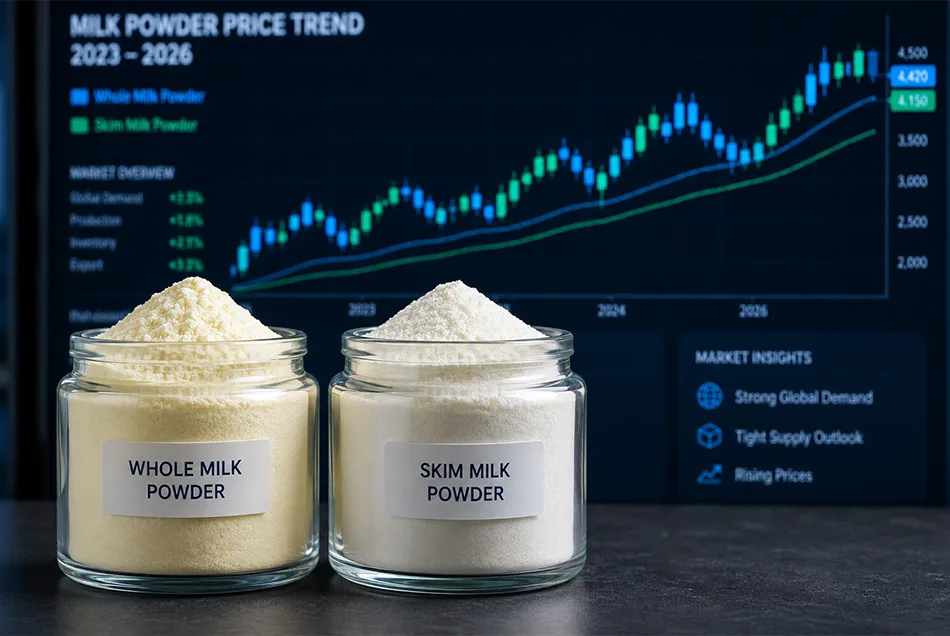
Milk powder price is a key benchmark in global dairy trade, shaping procurement decisions for importers, distributors, and food manufacturers. Even a 5–10% price change can quickly impact production costs and profit margins. From 2023 to 2026, global milk powder price volatility has been driven by milk supply, energy costs, and shifting demand across Asia, the Middle East, and CIS markets, based on reports from FAO, USDA, and the EU Dairy Observatory.
 Milk powder price is a key benchmark in global dairy trade, shaping procurement decisions for importers, distributors, and food manufacturers. Even a 5–10% price change can quickly impact production costs and profit margins. From 2023 to 2026, global milk powder price volatility has been driven by milk supply, energy costs, and shifting demand across Asia, the Middle East, and CIS markets, based on reports from FAO, USDA, and the EU Dairy Observatory.
Global Milk Powder Market Overview (2023–2025)
• The global milk powder market value in 2024 is estimated between USD 38–42 billion.
• Expected CAGR through 2030: 4–5% annually.
• Global milk production growth in 2025: approximately 0.4% increase among major exporters.
• Asia accounts for more than 45% of global dairy imports.
Growth is driven by:
• expanding bakery and confectionery production
• rising infant formula demand
• increased consumption of ready to eat foods
• demand for long shelf life dairy ingredients
These milk powder market trends directly influence global pricing dynamics.
Key Drivers Behind Milk Powder Price Fluctuations
1. Global Milk Production
Milk powder production depends directly on raw milk supply. Major dairy exporting regions such as the European Union, New Zealand, and the United States play a dominant role in determining global supply.
Weather conditions, feed costs, and farm profitability influence milk production volumes. When production decreases in these regions, the global milk powder price tends to rise due to tighter supply.
2. International Supply and Demand
The balance between supply and demand strongly affects milk powder price movements.
Top Milk Powder Importing Countries (2024 Data)
| Rank | Country | Primary Type Imported | Market Impact |
| 1 | China | WMP | Major price driver |
| 2 | Algeria | SMP & WMP | Large volume importer |
| 3 | Indonesia | WMP | Growing demand |
| 4 | Mexico | SMP | Stable industrial demand |
| 5 | Pakistan | SMP & WMP | Expanding food industry |
| 6 | Middle East Region | Mixed dairy powders | Price-sensitive markets |
When demand rises rapidly in these regions, global markets respond with price increases, especially for whole milk powder, which is widely used in dairy processing and confectionery production.
3. Energy and Production Costs
Energy prices significantly affect dairy processing costs. Producing milk powder requires large amounts of energy for evaporation and spray drying processes.
Higher costs for:
- electricity
- natural gas
- transportation fuel
often lead to higher milk powder price levels in international markets.
4. Trade Policies and Tariffs and Currency Exchange Rates
Import tariffs, trade agreements, and government regulations influence dairy trade flows. Changes in import duties or export restrictions can quickly alter supply availability and lead to price volatility.
Also a strong USD affects international dairy commodity prices and importer purchasing power.
For importers operating in regions such as the Middle East or Central Asia, monitoring these policies is essential for predicting milk powder price forecast trends.
5. Logistics and Transportation
Global dairy trade relies heavily on efficient logistics networks. Shipping costs, port congestion, and container availability can influence final import prices.
Disruptions in international shipping routes or rising freight costs often increase the landed price of dairy ingredients for importers.
Skim Milk Powder Price vs Whole Milk Powder Price

Although both products originate from raw milk, their market dynamics differ.
Recent Price Data for SMP:
• 2023 average global SMP price: USD 2,600–2,900 per metric ton
• Early 2024 peak levels: near USD 3,000 per metric ton
• EU and US combined export share: approx. 50% of global SMP trade
SMP prices are highly sensitive to:
• milk protein availability
• export volumes from the EU
• feed cost fluctuations
• seasonal milk output
SMP is widely used in:
bakery products
processed cheese
yogurt manufacturing
dairy beverages
Because of its high protein content and versatility, skim milk powder demand remains stable across food industries.
Recent Price Data for WMP:
• 2024 average WMP price: USD 3,200–3,600 per metric ton
• New Zealand accounts for approximately 50% of global WMP exports
• China remains the largest WMP importer globally
A surge in Chinese import demand can increase global milk powder price levels by 5–8% within a short trading cycle.
WMP contains natural milk fat and is commonly used in:
confectionery production
chocolate manufacturing
infant formula
dairy beverages
Demand from Asian markets, particularly China, plays a major role in determining whole milk powder price trends.
Milk Powder Price Forecast (2025–2026 Outlook)
Monitoring milk powder price forecast indicators allows importers to manage purchasing strategies effectively.
Important indicators include:
- global milk production reports
- dairy commodity exchanges
- seasonal demand cycles
- export volumes from major producers
Importers who follow these signals can identify favorable buying periods and reduce procurement risks.
Based on current global dairy indicators:
• If milk production remains stable, prices may fluctuate within a moderate ±5% range.
• Any supply shock in EU or New Zealand could push prices upward by 5–10%.
• Strong Asian demand continues to support WMP price stability.
• Protein demand in food manufacturing keeps SMP prices relatively firm.
Importers should closely monitor:
• global dairy trade reports
• milk output data
• Asian import volumes
• energy price trends
Market Insight for Hiroland Customers
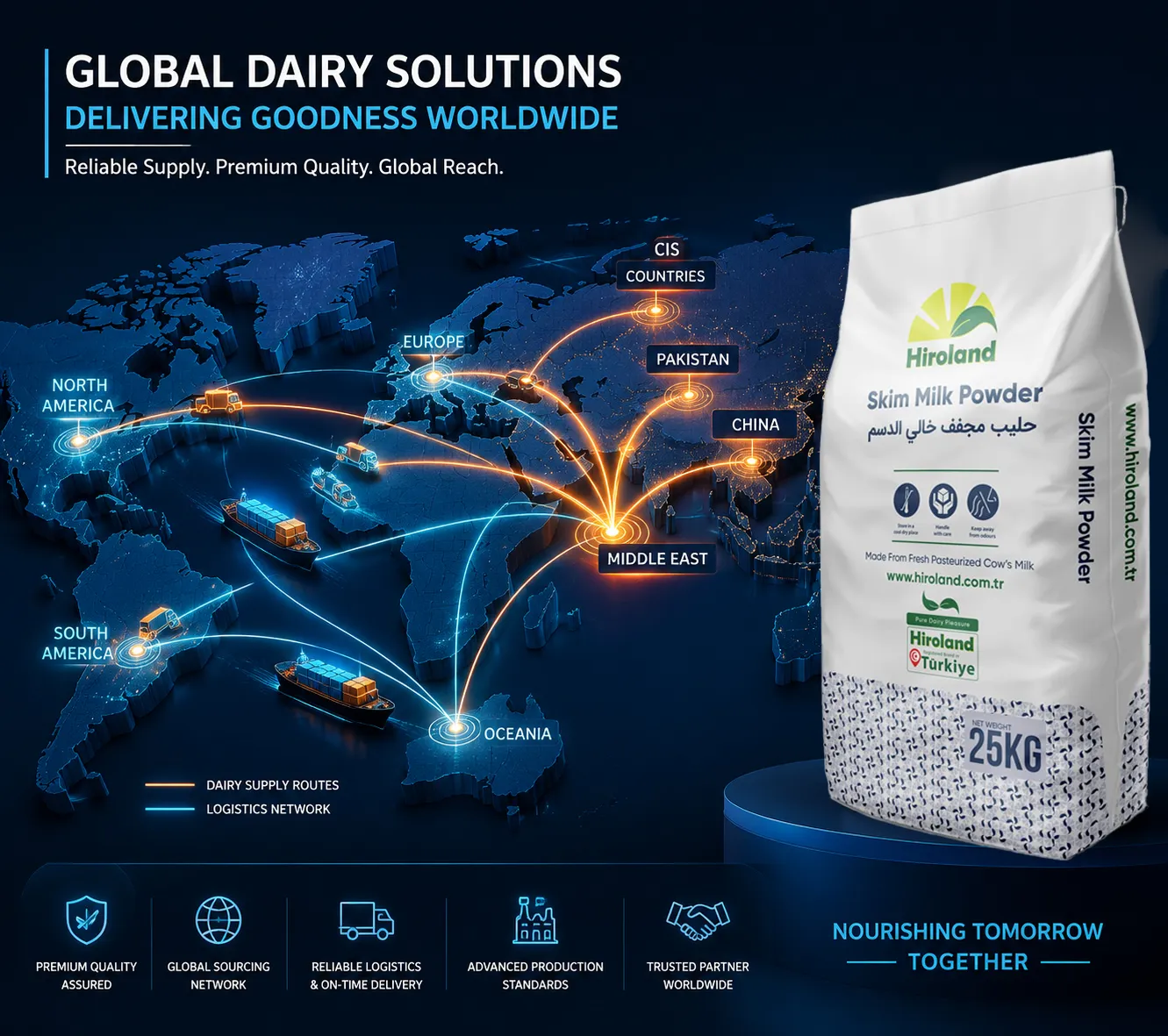
For importers operating in Afghanistan, Pakistan, CIS countries, Russia, China, Iraq, and the Middle East, price sensitivity is high but consistent supply is equally critical.
Hiroland offers:
• Competitive international pricing aligned with global milk powder price trends
• Premium quality skim and whole milk powder
• Strict quality control standards
• Reliable export logistics and on-time shipment
• Experience in regional trade regulations
With experienced logistics coordination and international trade expertise, Hiroland supports B2B customers in managing cost risks and maintaining stable supply chains.
What Importers Should Watch in the Milk Powder Market
To make strategic purchasing decisions, importers should monitor:
• monthly global milk production reports
• SMP and WMP export volumes
• dairy commodity auction results
• freight cost indexes
• seasonal supply cycles
Businesses that combine data analysis with reliable supplier partnerships can significantly reduce procurement risk.
Conclusion
Milk powder price fluctuations are influenced by multiple global factors including milk production levels, supply and demand balance, energy costs, international trade policies, and logistics conditions. As global demand for dairy ingredients continues to expand, understanding these drivers becomes essential for food manufacturers and importers.
Businesses that closely monitor milk powder market trends, evaluate skim milk powder price and whole milk powder price dynamics, and partner with reliable dairy ingredient suppliers can better manage risks and secure stable ingredient supply in an increasingly competitive food industry.
For technical specifications and personalized procurement advice regarding our dairy ingredient range, reach out to the Hiroland team here.
Read More: Types of Milk Powder: Which One Can Revolutionize Your Dairy Imports?
Read More: Dairy: World Markets and Trade